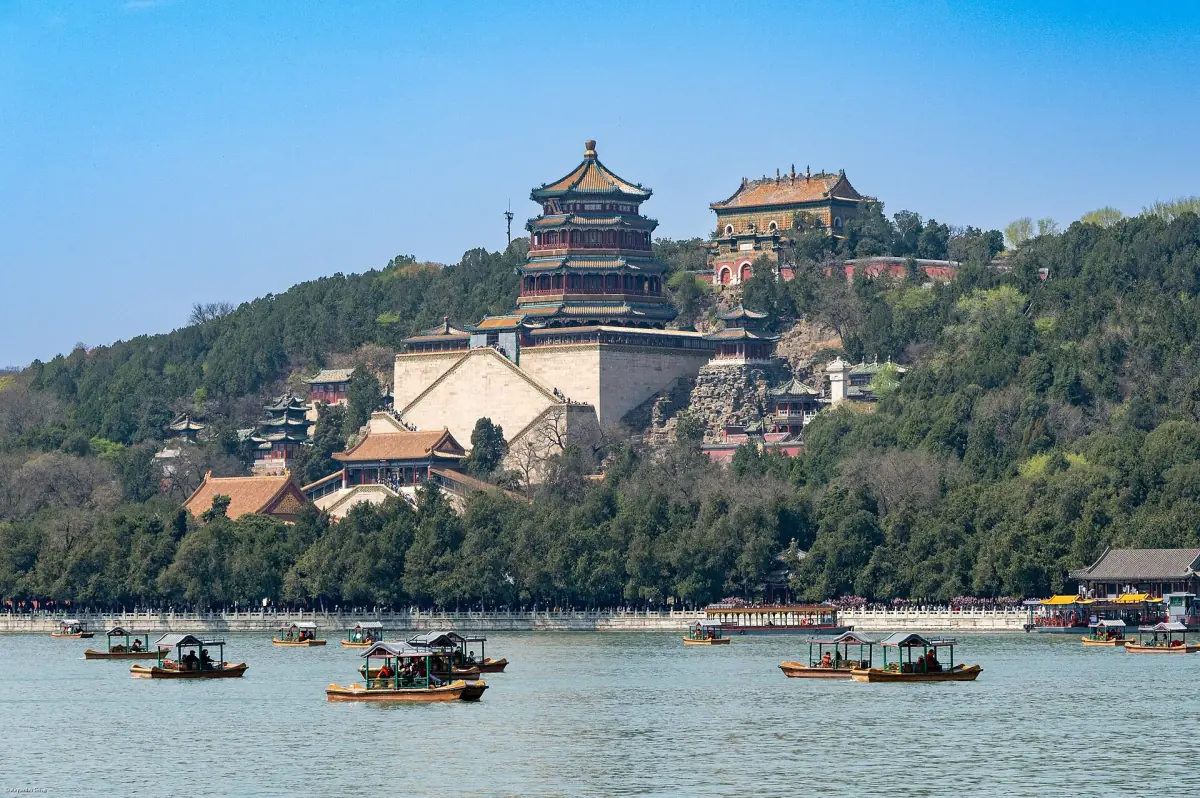
The history of the Summer Palace at a glance
The garden began as Qingyi Yuan in 1750, under the Qianlong Emperor. Anglo-French troops destroyed it in 1860. Rebuilding started in 1886, and in 1888 the garden was renamed Yihe Yuan, the name it carries today, as a summer residence for Empress Dowager Cixi. Troops of the Eight Powers devastated it again in 1900, and repairs followed in 1902. UNESCO listed the site in 1998.
Several of the best-known sights you visit today were rebuilt after 1860 on the layout of the earlier garden. This site is an independent guide and has no link to the park administration.
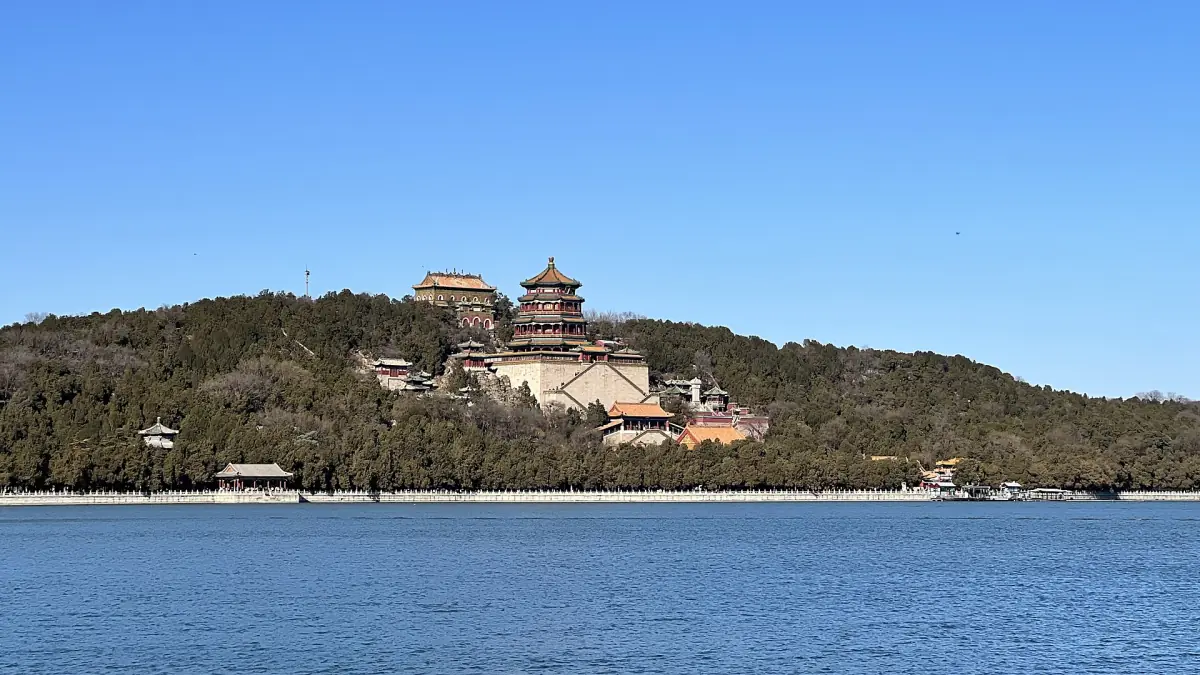
Timeline of the Summer Palace
The main dates, in order.
| Year | What happened |
|---|---|
| 1750 | Qingyi Yuan is laid out under the Qianlong Emperor. The Long Corridor and the Seventeen-Arch Bridge date from this year. |
| 1755 | The Marble Boat is built, 36 metres long. |
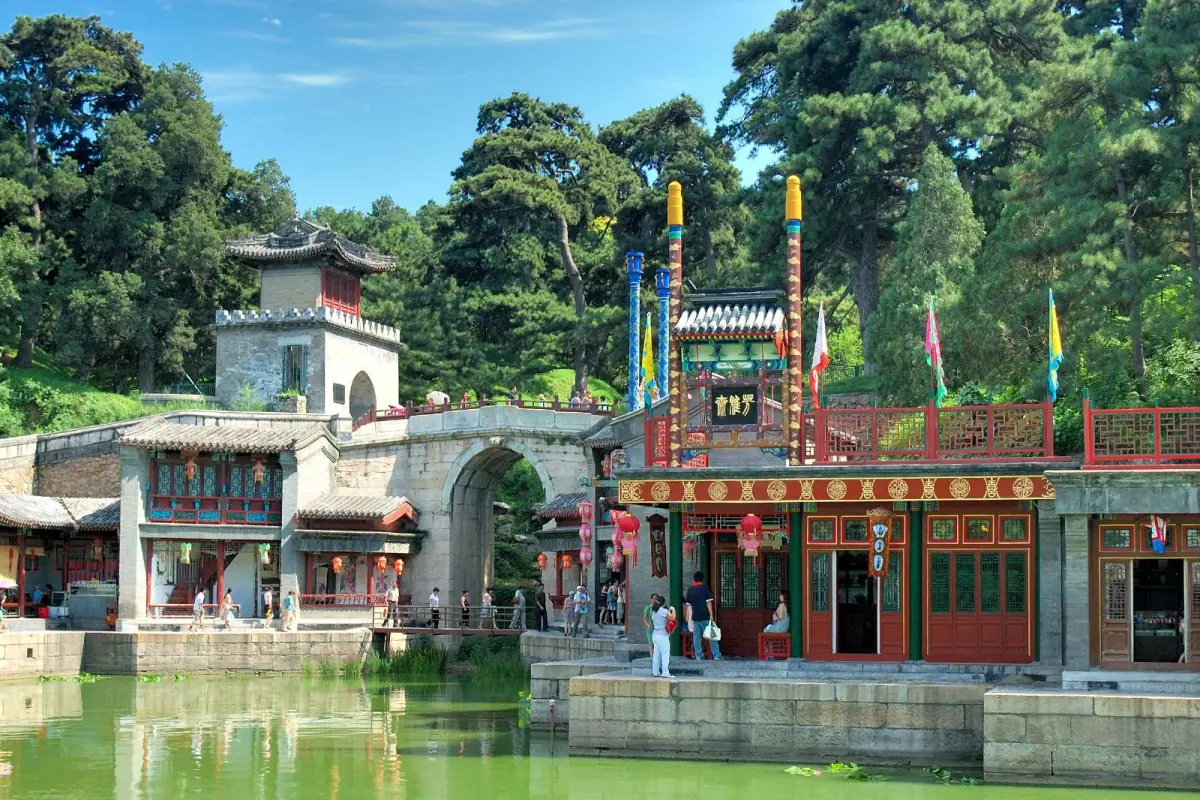
| 1860 | Anglo-French troops destroy the garden, including the Tower of Buddhist Incense, the Long Corridor and Suzhou Street. The upper structure of the Marble Boat burns. |
| 1886 | Rebuilding begins. The Long Corridor is rebuilt in this year. |
| 1888 | The garden is renamed Yihe Yuan, as a summer residence for Empress Dowager Cixi. |
| 1893 | The Marble Boat is rebuilt in a western-influenced form. |
| 1900 | Troops of the Eight Powers devastate the garden. Repairs follow in 1902. |
| 1986 to 1990 | Suzhou Street is rebuilt and opens to visitors on 16 September 1990. |
| 1998 | UNESCO inscribes the Summer Palace as an imperial garden in Beijing. |
The rebuilding of 1886 is not the same event as the renaming of 1888. Building work began first, and the new name came two years later.
Summer Palace tours and tickets
Entry tickets, guided walks and day trips that include the Summer Palace, with live prices and availability.
Qianlong and the lake
Qingyi Yuan was laid out in 1750. Kunming Lake was already a natural lake. Under the Qianlong Emperor it was deepened and enlarged, and the West Dyke took its design ideas from West Lake in Hangzhou. Longevity Hill, in Chinese Wanshoushan, forms the back of the garden. About three quarters of the park is water.
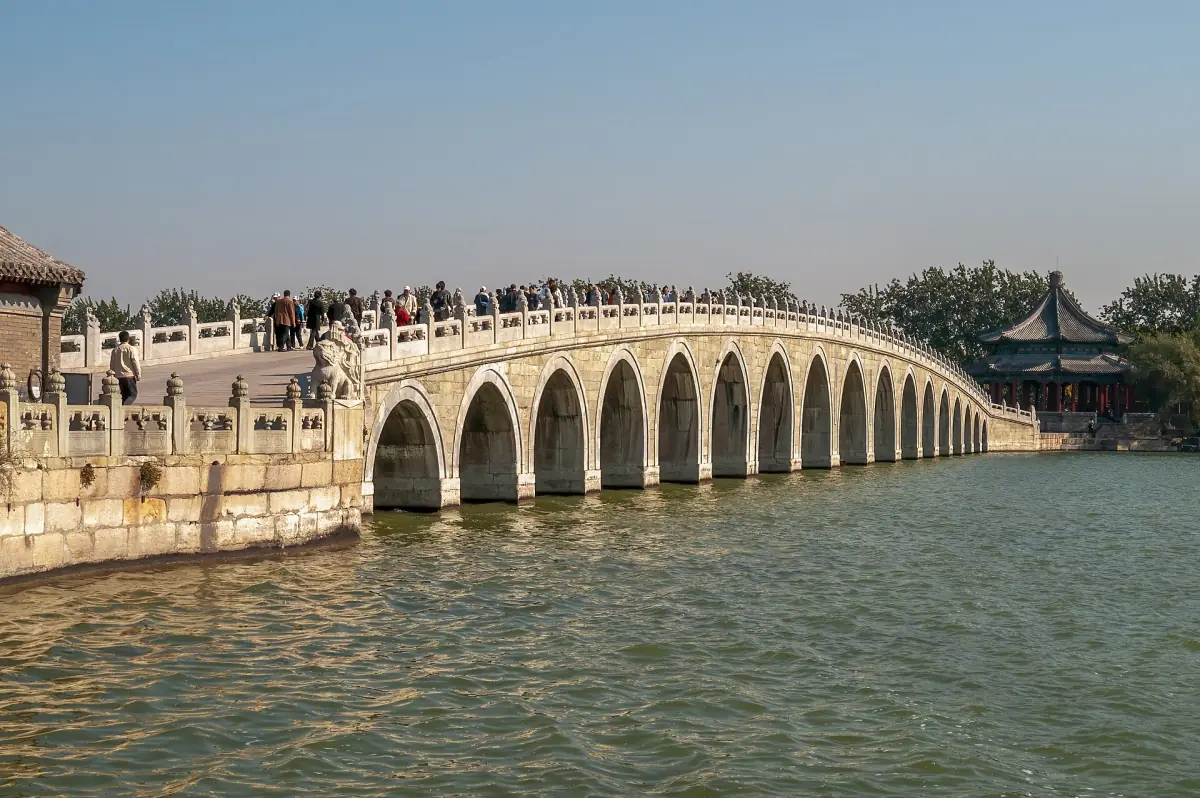
From this period come the Long Corridor and the Seventeen-Arch Bridge, both from 1750, and the Marble Boat of 1755. Suzhou Street and the Tower of Buddhist Incense were also built under Qianlong.
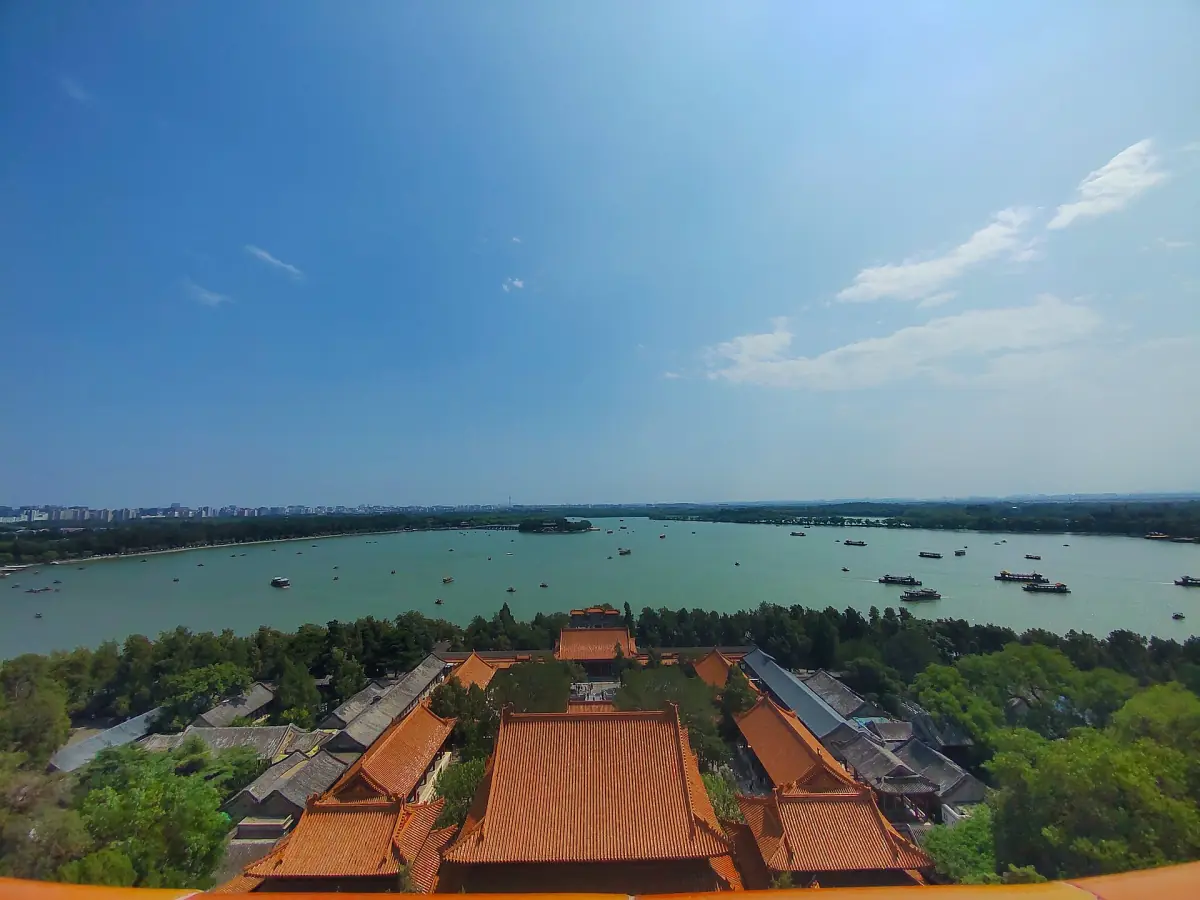
The rebuilding and Empress Dowager Cixi
After 1860 the garden lay in ruins. The rebuilding began in 1886. It used money that had been meant for the imperial navy, among other sources of funding. In 1888 the garden received the name Yihe Yuan and became the summer residence of Empress Dowager Cixi.
The Tower of Buddhist Incense was rebuilt under the Guangxu Emperor on its original form. The Long Corridor and the Marble Boat were restored as well, the boat with a western-influenced design in 1893. In 1900 the garden suffered again, when troops of the Eight Powers devastated it, and repairs were carried out in 1902.
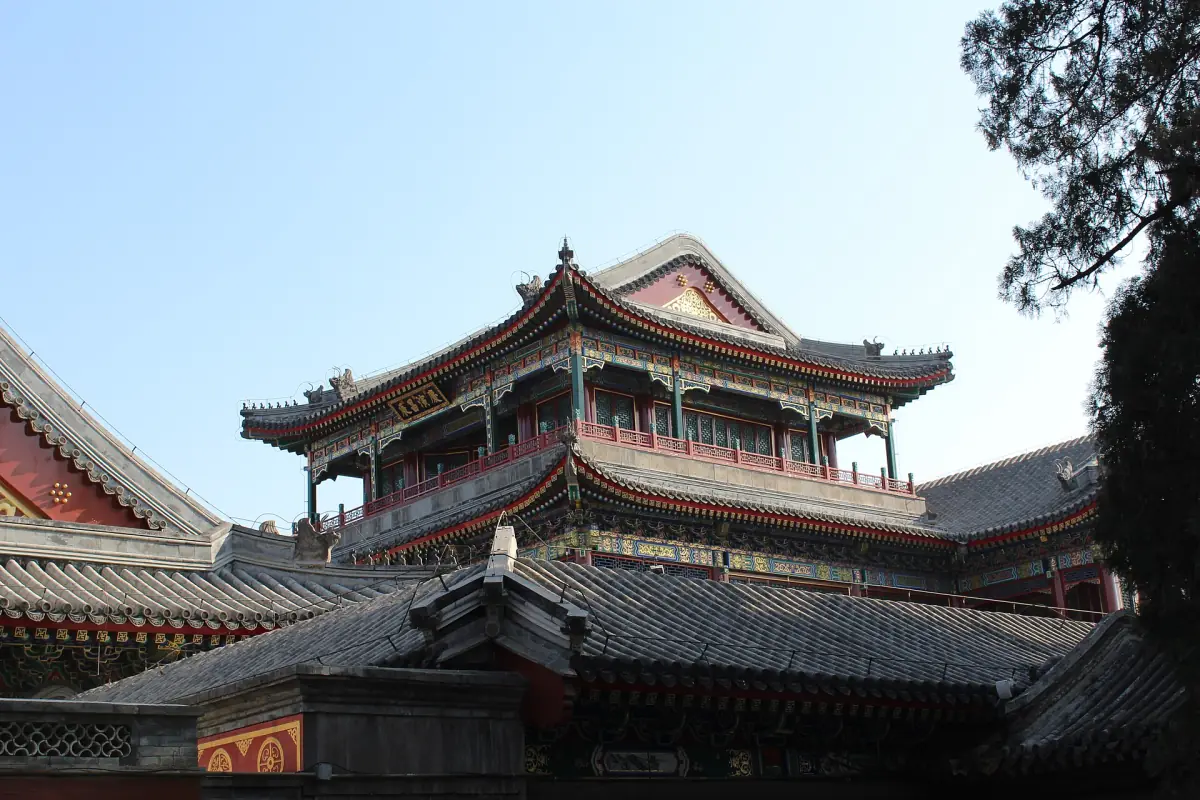
UNESCO World Heritage since 1998
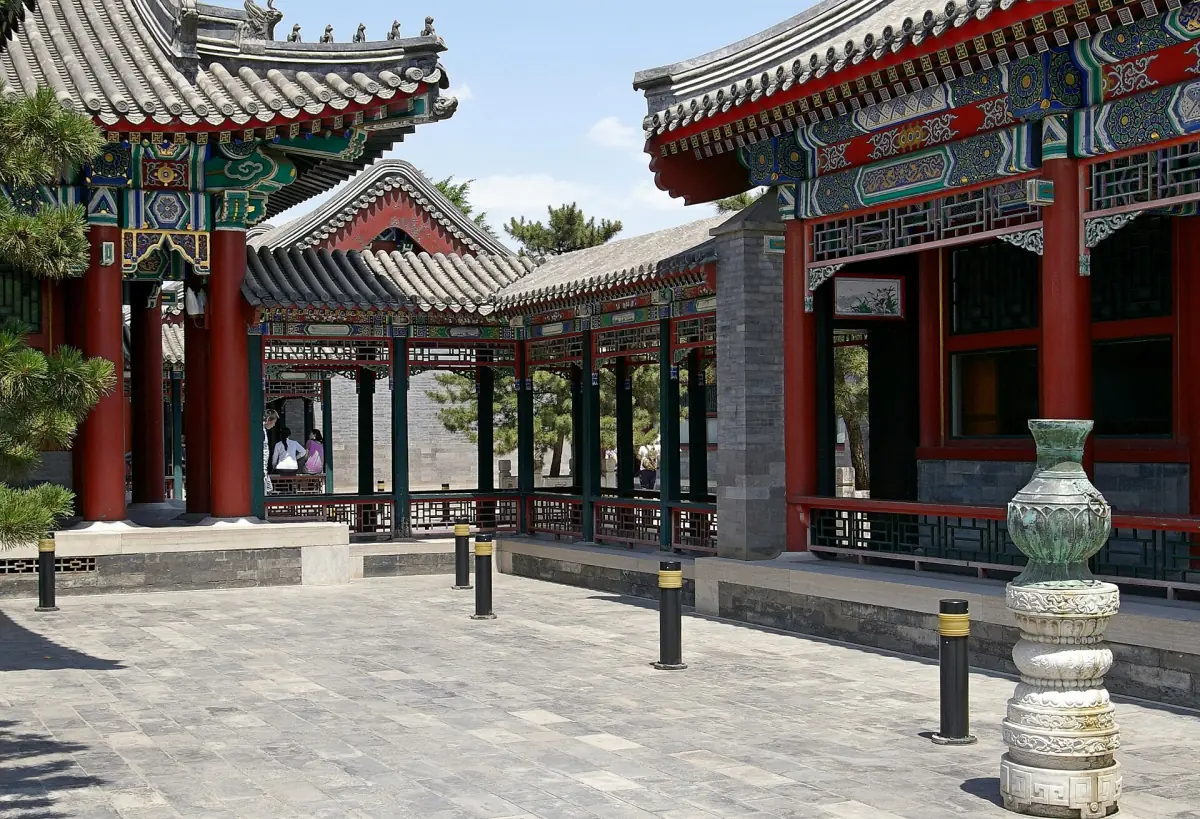
The Summer Palace was inscribed in 1998 under criteria (i), (ii) and (iii). The listing recognises a combination of natural landscape with halls, temples, pavilions, bridges and garden architecture. The entry covers the garden as it was laid out and as it was rebuilt after the destruction.
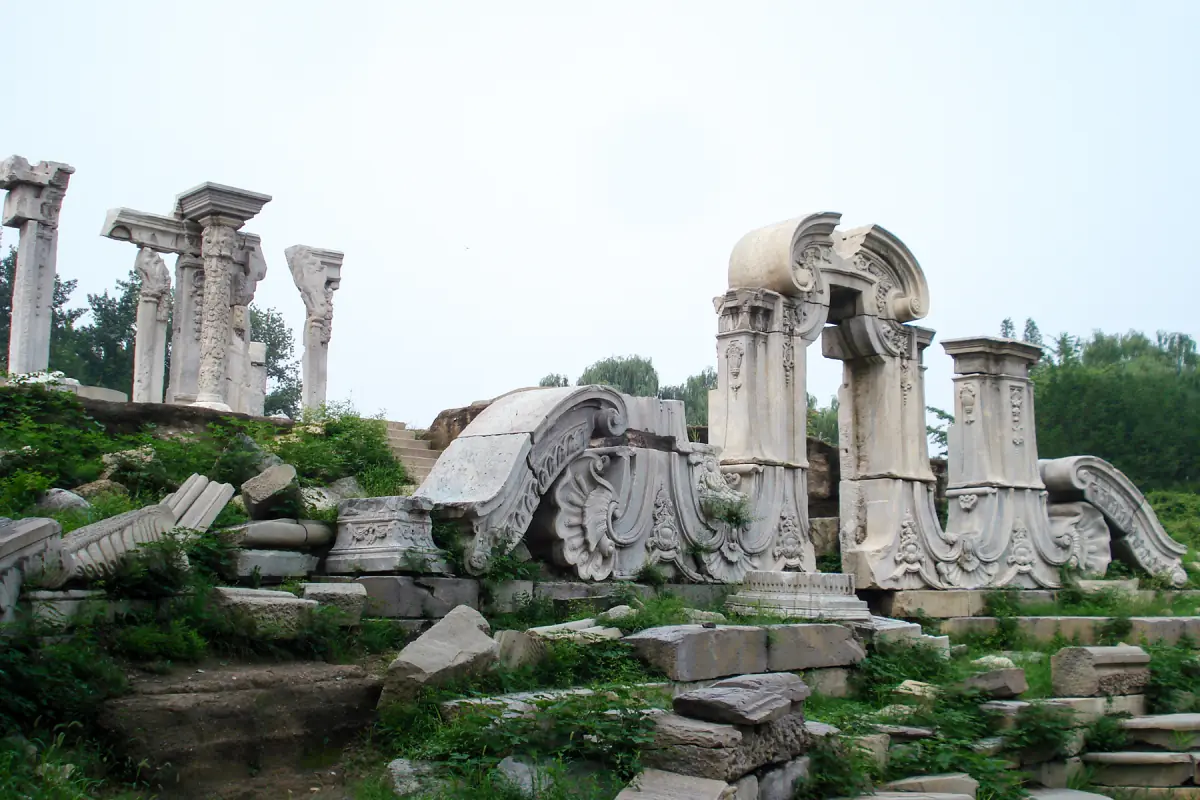
The World Heritage property covers 297 hectares, with a buffer zone of 5,595 hectares. The Old Summer Palace (Yuanmingyuan) is a separate park and is not part of this listing. It has its own page: Old Summer Palace.
For the history of the other great imperial site in Beijing, from the Ming and Qing emperors to the museum, see the Forbidden City guide.
Where to see the history today
Four places in the park that tell the story.
Summer Palace Museum
The museum stands east of the Wenchang Pavilion. It costs CNY 20 on top of the park ticket and is closed on Mondays, except on the named holidays. Hours are 08:00 to 18:00 with last entry at 17:30 from April to October, and 08:30 to 17:00 with last entry at 16:30 from November to March.
Tickets →The Long Corridor
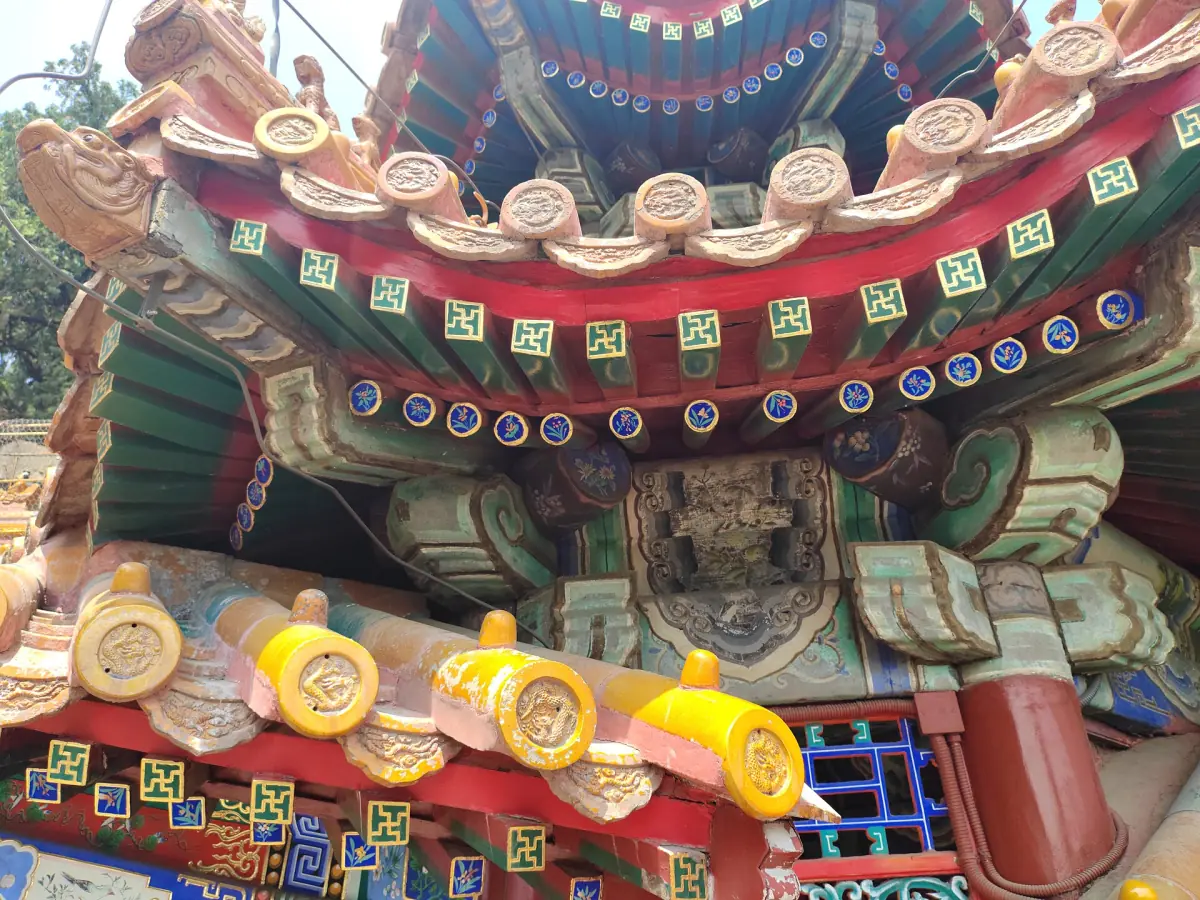
Built in 1750, destroyed in 1860, rebuilt in 1886. It is 728 metres long and carries more than 14,000 paintings.
Long Corridor →The Tower of Buddhist Incense
The landmark of Longevity Hill, destroyed in 1860 and rebuilt under the Guangxu Emperor.
Tower of Buddhist Incense →Plan the rest of your visit
More pages for your trip.
Summer Palace history: frequently asked questions
When was the Summer Palace built?
The garden was laid out in 1750 as Qingyi Yuan under the Qianlong Emperor. It was destroyed in 1860, rebuilt from 1886 and renamed Yihe Yuan in 1888.
Who destroyed the Summer Palace?
Anglo-French troops destroyed the garden in 1860. In 1900 troops of the Eight Powers devastated it again, and repairs followed in 1902.
Who lived at the Summer Palace?
After the rebuilding, it served as a summer residence for Empress Dowager Cixi, from the renaming in 1888.
When did UNESCO list the Summer Palace?
In 1998, under criteria (i), (ii) and (iii). The property covers 297 hectares.
Is the Old Summer Palace part of the Summer Palace?
No. The Old Summer Palace (Yuanmingyuan) is a separate park with its own ticket and its own ruins. It is not part of the UNESCO listing of the Summer Palace.